Understanding Folding Carton Pricing: What Really Drives Your Quote
If you’ve ever compared two folding-carton quotes that look like they’re for the same box and wondered why the numbers don’t line up, you’re not alone. Folding carton pricing isn’t a simple “size × material” equation.
For most retail packaging programs, you’re paying for a combination of paperboard, printing, finishing, converting, and risk control—and the spec details determine how efficiently a factory can make your carton with consistent quality.
This guide breaks down the main folding carton cost factors (without publishing price ranges) and gives you a practical framework to compare quotes apples-to-apples.
A simple model for folding carton pricing
Most folding carton quotes can be understood as six buckets:
- Material: paperboard grade, thickness (caliper), and how efficiently the layout uses the sheet.
- Prepress & setup: artwork checks, proofing, and press make-ready.
- Printing: number of colors, ink coverage, and consistency requirements.
- Finishing: coatings, laminations, foil, embossing, spot UV, window patches.
- Converting: die cutting, stripping, gluing, and packing.
- Quality control & risk margin: inspection steps, tighter tolerances, and allowance for waste.
Pro Tip: When a quote feels “mysteriously high,” ask the supplier which bucket moved—and what spec detail triggered it. You’ll get a clearer answer than “materials went up.”
Material choices that move the quote
Paperboard is usually the largest cost driver, but buyers often underestimate how many different decisions hide inside “paperboard.” Grade, thickness, coating, and yield all change the result.
SBS vs FBB vs CCNB: what you’re trading
Three common grades used for folding cartons are SBS, FBB, and CCNB/CRB.
- SBS (Solid Bleached Sulfate) is a virgin-fiber board known for a bright, white appearance and strong print performance. It’s often chosen for premium shelf presence and applications where clean aesthetics matter. Definitions vary by source, but the common thread is “bleached virgin fiber + strong visual performance,” as summarized in Paperbox.org’s overview of paperboard types (2019) and PakFactory’s paperboard grade overview (2023).
- FBB (Folding Box Board / GC) is typically multi-ply and known for stiffness-to-weight efficiency. It’s often selected when you need a carton to feel rigid in-hand without overbuilding the thickness.
- CCNB/CRB (recycled paperboard) is generally the most cost-driven option and can be a fit for certain products, but surface and strength characteristics may limit how far you can push premium graphics and finishing.
For quick definitions and a packaging-buyer-friendly overview of these grades, see Paperbox.org’s overview of paperboard types (2019) and PakFactory’s paperboard grade overview (2023).
What this means for quote comparison: if one supplier spec’d SBS and another spec’d a recycled grade, you’re not comparing the same product—even if the dieline is identical.
Caliper, stiffness, and “what’s actually required”
Thickness (caliper) affects more than “feel.” It can change:
- crease quality (risk of cracking on folds)
- carton rigidity (how it holds shape on shelf)
- run speed and waste (some board/finish combinations are less forgiving)
If you’re trying to reduce cost, don’t start by saying “make it thinner.” Start by clarifying performance requirements:
- Does the carton need to support stacking in transit?
- Is it going through an automated packing line?
- Does it need strong corner integrity or tear resistance?
Once performance is defined, you can right-size the caliper instead of guessing.
Artwork, proofs, and setup costs buyers forget to ask about
Two quotes can differ simply because one supplier included more front-end work.
Common prepress items that affect folding carton pricing:
- file cleanup and preflight (fonts, bleeds, overprint settings)
- color management expectations (brand color tolerance, reference standards)
- proofing approach (digital proof vs press proof)
- change control (how revisions are handled once production starts)
If you want predictable pricing, align on:
- what counts as a “revision”
- what proof is included
- what triggers a re-make of plates/make-ready
This is one reason packaging buyers are advised to look beyond “paper + printing.” Meyers Printing’s broader view of the hidden work behind packaging quotes is useful context in their true cost of product packaging guide (2023).
Printing variables: colors, coverage, and consistency
Printing costs shift with complexity and control.
Key variables to watch:
- Color count and spot colors: CMYK is one thing; adding spot colors can add steps and tighter control.
- Ink coverage: heavy solids and rich blacks can increase ink usage and require more careful drying/curing.
- Consistency requirements: the tighter your acceptable variation (especially for brand colors), the more time goes into setup and in-process checks.
If your brand team requires extremely tight color matching, that’s valid—but it should be an explicit line item in your quote assumptions.
Finishes: where cost jumps fast
Finishes often create the biggest quote swings because they add extra materials, extra passes, extra tooling, and slower throughput.
Common finishes that materially affect cost:
- Coatings (aqueous, UV) for scuff resistance and appearance
- Lamination (gloss/matte/soft-touch) for texture and durability
- Foil stamping for premium highlights
- Embossing/debossing for tactile branding
- Spot UV to add contrast and depth
- Window patch for product visibility (often adds materials + process steps)
How to reduce cost without losing shelf impact:
- Use a premium finish selectively (e.g., one logo area) instead of across the entire carton.
- Choose one “hero effect” (foil or emboss or spot UV) rather than stacking multiple effects.
- Confirm whether your design truly needs lamination or if a coating achieves the durability target.
Two cartons with the same footprint can have very different converting costs.
Converting is where structural choices become labor, tooling, and waste:
- die cutting and stripping (complex shapes take longer)
- gluing patterns (more glue points, special folds, or multi-point glue can slow runs)
- special structures (locks, tear strips, display features)
- packing requirements (bundling, counting, orientation)
If you’re exploring innovative structures, this internal example page can help you think through what you’re asking a supplier to produce: inspiring folding packaging and designing ideas. (It’s design-focused—use it for inspiration, then translate the ideas into manufacturable specs for quoting.)
Quality requirements and tolerances (and how they affect waste)
Quality isn’t free—because quality is controlled through time, checks, and sometimes rework.
The more tightly you define requirements, the more the supplier has to protect the run:
- color variation tolerance (brand-critical colors)
- registration tolerance (especially near folds and die cuts)
- finish placement tolerance (foil alignment, spot UV alignment)
- fold/crease performance (cracking, whitening)
- scuff and rub resistance (retail handling)
None of these are “bad.” The risk happens when you assume them but don’t specify them. Then different suppliers fill in the blanks differently—so your quotes diverge.
Sustainability and certification claims that affect materials and documentation
Sustainability choices can shift both material selection and documentation expectations.
If you’re using FSC-certified materials, it helps to understand what that claim really means.
- FSC chain-of-custody certification is designed to make forest-based materials traceable through the supply chain, including paper and packaging, as explained in FSC’s paper and packaging guidance.
- FSC also emphasizes enforcement against false claims; see FSC’s guidance on false claims (2024).
What this means for quotes: if your program requires certified content and correct labeling/claims, the supplier’s process discipline and documentation matter—not just the board price.
How to reduce folding carton cost without cheapening the brand
When buyers say “we need to lower packaging costs,” the fastest path is usually not “find cheaper board.” It’s reducing complexity, waste, and revision cycles.
Here are high-leverage levers that keep shelf impact intact:
-
Standardize specs across SKUs
- Fewer board grades, fewer finishes, fewer exception rules.
-
Design for yield
- Small dieline adjustments can improve layout efficiency on press sheets.
-
Choose one hero finish
- Pick the finish that best supports your brand signal and drop the rest.
-
Reduce revision loops
- Lock artwork earlier. Late changes are expensive because they trigger new setup and new risk.
-
Align quality criteria to the product reality
- Define what matters most (color, scuff resistance, crease cracking) and avoid over-specifying everything.
-
Right-size packaging performance
- Overbuilt cartons cost more and can create downstream issues (harder folding, slower lines).
If you want a broader overview of why there’s no single “average box price,” this internal reference is helpful: How much does a cardboard box cost?
Quote-comparison checklist: what to send every supplier
If you want quotes you can actually compare, send every supplier the same inputs:
- Dieline (with version number) + 3D mockup if available
- Board grade and caliper (or performance requirements if you’re open to recommendations)
- Print specs (CMYK + spot colors, coverage notes)
- Finish specs (coating/lamination type; foil/emboss/spot UV locations)
- Color expectations (brand standards; acceptable variation)
- Pack-out requirements (bundling, labeling, palletization)
- Compliance requirements (FSC claims, food-contact needs if applicable)
- Timeline expectations (proof approval date, production window, ship method)
⚠️ Warning: If your RFQ says “premium box, good quality,” you’ll get “premium” quotes that mean different things. Specific specs reduce surprises later.
FAQ
Are folding cartons always cheaper than rigid boxes?
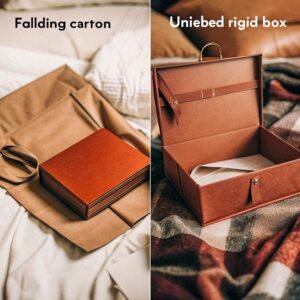
Not always—but folding cartons are generally more material-efficient and are often faster to produce at scale. Rigid boxes can make sense when durability and premium unboxing experience are the product’s value signal. If you’re comparing formats, this internal explainer is a useful reference: benefits of custom magnetic closure boxes.
What’s the single biggest driver of folding carton pricing?
If you have to pick one, it’s usually the combination of material choice and complexity (printing + finishing + structure). In practice, finishes and tight tolerances can swing quotes more dramatically than buyers expect.
How do I lower cost without lowering perceived quality?
Reduce complexity, improve yield, and choose one premium cue (like a selective foil accent) rather than stacking multiple effects. Lock your artwork earlier and specify quality expectations clearly.
Why do quotes vary so much between suppliers?
Because suppliers make different assumptions when your RFQ leaves gaps—board grade, acceptable waste, quality checks, and proofing expectations. Standardize the spec sheet, and quote variation becomes easier to explain.
Next steps
If you manage multiple SKUs, create a one-page “carton spec sheet” your team uses for every RFQ. It will shorten quote cycles, reduce redesign churn, and make folding carton pricing far easier to negotiate—because everyone is comparing the same thing.